


The 3 Things I Always Check Before the First Customer Arrives


There’s a very specific moment at almost every craft show that most customers never witness. It happens somewhere between unloading the car and the first wave of shoppers entering the aisles. Vendors are adjusting displays, drinking lukewarm coffee, searching for missing tape, fixing crooked signs, and trying to mentally transition from setup mode into sales mode. It’s chaotic, rushed, and honestly a little stressful no matter how experienced you are.
But over the years, I’ve learned that the final few minutes before a show officially opens can quietly shape the entire day.
Not because everything has to be perfect.
But because customers start forming opinions about your booth almost immediately — often before they ever touch a product or speak to you. The way your booth feels emotionally matters more than many vendors realize. Some spaces naturally invite people inward while others unintentionally push people away, even when the products themselves are beautiful.
That’s why I always stop and do one final walkthrough before the first customer arrives.
And interestingly enough, I’m rarely checking the products themselves.
“Customers Decide How Comfortable They Feel Before They Ever Pick Something Up.”
The very first thing I check is whether customers can comfortably enter the booth.
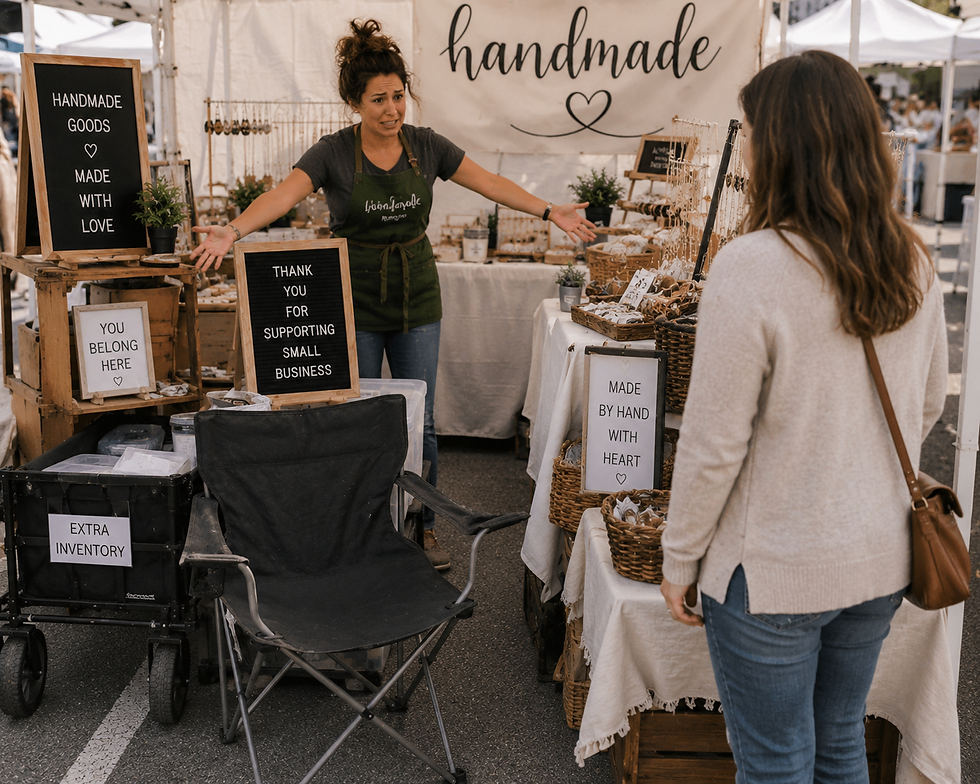
This sounds incredibly basic, but it’s one of the most common issues I see at events. Vendors work so hard to maximize space and display inventory that they accidentally create barriers without realizing it. Chairs get placed directly at the front opening. Wagons remain partially visible. Tables extend too far outward. Displays narrow the walking path until customers feel like they’re squeezing into someone’s personal workspace instead of casually browsing.
Most customers will not force themselves into an uncomfortable space.
If a booth feels cramped, blocked, awkward, or overly personal, many people simply glance and keep walking.
Before every event opens, I physically step outside my booth and look at it from a customer’s perspective instead of my own. I ask myself a few quiet questions. Is the entrance visually open? Can someone walk in naturally without maneuvering around obstacles? Does the booth feel welcoming or guarded?
Sometimes the solution is as small as moving a chair six inches.
And yet those tiny changes can completely alter how approachable a booth feels.
The second thing I always check is my signage and branding visibility.
At large events, customers are processing an overwhelming amount of visual information all at once. Booth after booth competes for attention, which means customers are making split-second decisions as they walk. If your signage is unclear, blocked, too small, or visually cluttered, people may never fully understand what you sell before they move on.
One of the biggest mistakes vendors make is assuming customers will stop long enough to “figure it out.”
Most won’t.
Your booth should communicate clearly and quickly from a distance.

Before the show begins, I always walk several booths away from my setup and look back toward my space. I check whether my banner is readable within seconds. I look to see whether inventory is accidentally covering important wording. I pay attention to whether the booth visually explains itself without requiring effort from the customer.
Clear branding creates confidence.
Confusing branding creates hesitation.
And hesitation is often enough for a customer to continue walking.
“A Calm Booth Almost Always Outperforms a Chaotic One.”
The final thing I check before opening is something that’s harder to measure but impossible to ignore once you recognize it.
Energy.

Some booths immediately feel calm, inviting, and easy to shop in. Others feel visually exhausting before a customer even steps inside. Usually this happens because vendors unintentionally overload the space with too much inventory, too many signs, too many colors, or too many competing focal points all fighting for attention at the same time.
The interesting thing is that overcrowding often comes from good intentions. Vendors are trying to maximize opportunity. They want customers to see everything they offer. But in reality, visual overwhelm can make customers mentally shut down faster.
So before opening, I always look for one thing I can simplify.
Maybe it’s removing extra inventory from the front table.
Maybe it’s straightening displays.
Maybe it’s hiding supply bags or reorganizing packaging.
Maybe it’s simply creating more breathing room between products.
Customers shop longer in spaces where their eyes can rest.
That doesn’t mean your booth should feel empty or sparse. It simply means customers should be able to process what they’re seeing without feeling visually stressed.
And honestly, that feeling matters more than most people realize.
“The Best Booths Usually Aren’t the Loudest — They’re the Clearest.”
One of the biggest misconceptions in the vendor world is the belief that success comes from constantly adding more. More inventory. More decorations. More signs. More displays. More products squeezed into every available inch of space.
But after years of watching customer behavior at events, I’ve found the strongest booths are usually the ones that feel intentional.
Welcoming.
Clear.
Easy to shop.
Easy to understand.
Because long before customers buy something, they’re deciding something even more important first:
Whether they feel comfortable enough to stop.


Comments